Kent Starr is a criminal defense attorney in McKinney, Texas. He has practiced criminal defense in Collin County since 1997 and takes every consultation himself. The consultation is free and confidential: (214) 982-1408.
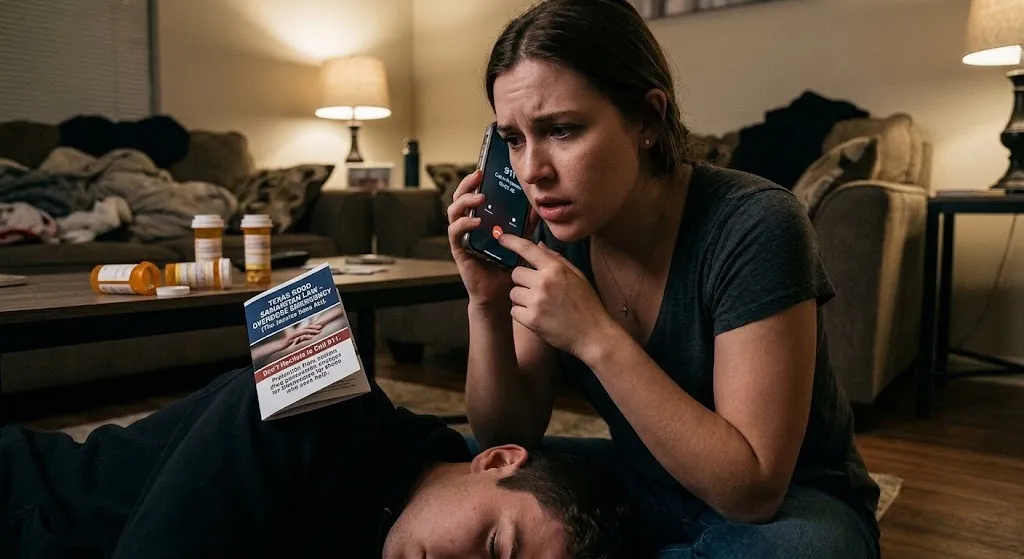
Someone is overdosing. Their breathing is shallow. Their lips are turning blue. You know you need to call 911. But you hesitate. What if the police show up and arrest you for the drugs in the room? What if you go to jail?
That hesitation, that fear, is exactly why people die from overdoses that could have been prevented. And it is why Texas passed the Jessica Sosa Act in 2021.
The law, codified in Texas Health and Safety Code § 481.115(g) and matching subsections for the other covered offenses, provides a defense to prosecution for certain low-level drug possession offenses if you call for emergency help during an overdose. It is not blanket immunity. It gives you a defense to raise if you are charged with one of the covered offenses.
At Starr Law, P.C., we handle drug offense cases in Collin County. We understand how this law works and how to use it to protect our clients.
What Is the Texas Good Samaritan Law?
Texas does not have a Good Samaritan law that provides automatic immunity from all drug charges. Instead, it has a limited defense to prosecution under the Jessica Sosa Act.

The intent was simple: remove the fear of arrest so people will call for help. The defense took effect September 1, 2021, and applies to offenses committed on or after that date. As of 2026, the defense reads the same as when it took effect.
Under § 481.115(g) and the matching subsections of the other covered offenses, it is a defense to prosecution for certain drug possession offenses if you meet specific requirements.
What Does the Defense Cover?
The defense applies to possession offenses involving small amounts of controlled substances. Specifically:
| Penalty Group | Substance Examples | Quantity Covered |
|---|---|---|
| Penalty Group 1 or 1-B (§ 481.115) | Cocaine, methamphetamine (Group 1); fentanyl (Group 1-B) | Less than 1 gram |
| Penalty Group 1-A (§ 481.1151) | LSD | Fewer than 20 abuse units |
| Penalty Group 2 (§ 481.116) | Adderall (amphetamine), MDMA, THC concentrates | Less than 1 gram |
| Penalty Group 2-A (§ 481.1161) | Synthetic cannabinoid compounds such as JWH-018 | 4 ounces or less |
| Penalty Group 3 (§ 481.117) | Certain benzodiazepines, such as alprazolam (Xanax) | Less than 28 grams |
| Penalty Group 4 (§ 481.118) | Buprenorphine | Less than 28 grams |
| Marijuana (§ 481.121) | Marijuana | 4 ounces or less |
For the penalty groups measured in grams or ounces, the amount is the aggregate weight, including adulterants and dilutants. That is why a THC edible is weighed in full, as explained in Are THC Edibles a Felony in Texas?.
The defense also covers using or possessing drug paraphernalia with intent to use it (§ 481.125(a)), possessing a controlled substance that is on a state schedule but not in a penalty group (§ 481.119(b)), possessing a dangerous drug (a prescription-only drug that is not a controlled substance) without a prescription (§ 483.041(a)), and misusing an abusable volatile chemical such as aerosol paint (§ 485.031(a)).
Important: The defense applies only to the possession-level offenses listed above. It does not cover delivery, distribution, or manufacture charges. And if you are committing another offense when the request for help is made, such as possessing drugs with intent to deliver them, the defense does not apply.
What Are the Requirements to Qualify?
To qualify for the defense, you must meet specific conditions:
If you are the person seeking help for someone else:
- You must be the first person to request emergency medical assistance for the possible overdose.
- You must make the request during an ongoing medical emergency.
- You must remain on the scene until medical assistance arrives.
- You must cooperate with medical assistance and law enforcement personnel.
If you are the person experiencing the overdose:
The defense can apply if emergency medical assistance was requested, by you or by another person, during an ongoing medical emergency.
In both situations, the exclusions below still apply.
When the Defense Does NOT Apply
The defense is not available in certain circumstances:
1. You are being arrested, or a search warrant is being executed, when the call is made. If, at the time the request for help was made, a peace officer was in the process of arresting you or executing a search warrant describing you or the place the request came from, the defense does not apply.
2. You are committing another offense. If you are committing another offense at the time of the request, other than the low-level possession offenses covered by the law, the defense does not apply.
3. You have a prior drug conviction or deferred adjudication. If you have been previously convicted of or placed on deferred adjudication community supervision for an offense under the Texas Controlled Substances Act (Chapter 481), the Texas Dangerous Drug Act (Chapter 483), or the abusable volatile chemicals chapter (Chapter 485) of the Health and Safety Code, the defense is not available.
4. You were acquitted before on this defense. If you were acquitted in an earlier case in which you successfully established this defense, or the matching overdose defense for another covered offense, you cannot use it again.
5. You requested emergency help for an overdose within the past 18 months. If, at any time during the 18 months before the date of the current offense, you requested emergency medical assistance for a possible overdose, your own or someone else’s, the defense is not available.
None of these exclusions is a reason to wait before calling 911. They decide whether this legal defense is available later, not whether someone gets medical help now.
What the Defense Does NOT Cover
It is important to understand the limitations of the Jessica Sosa Act:
- Delivery or distribution charges: A delivery charge is not one of the covered offenses.
- Manufacture charges: Production-related offenses are excluded.
- Amounts above the thresholds: Possession of 1 gram or more of Penalty Group 1, for example, is not covered.
- Outstanding warrants: The defense does not protect you from execution of unrelated arrest warrants.
- Other offenses observed at the scene: Firearms violations, child endangerment, and other offenses can be charged independently. The defense does not keep out evidence police obtain because of the request for help when that evidence relates to an offense the defense does not cover.
- DWI and intoxication offenses: The defense covers possession, not intoxication-related conduct.
- Federal charges: The law is state law. Federal prosecutions can proceed regardless.
Why You Need an Attorney
A defense to prosecution does not stop an arrest or a charge. In the chaos of an overdose scene, police may not have all the facts, and they may arrest you for an offense the defense covers before they understand the situation.
Having a defense attorney involved early matters. We can:
- Investigate the circumstances of your arrest
- Gather evidence that you met the requirements for the defense
- Challenge the prosecution’s case if the defense applies
- Negotiate for dismissal or reduction of charges
Drug Offense Defense in McKinney and Collin County
I have practiced criminal defense in Collin County since 1997, and at Starr Law, P.C. I handle drug offense cases from my office in McKinney. I understand how the Jessica Sosa Act works and how to use it to protect my clients.
The law is designed to save lives. It should not be a trap for people who did the right thing. If you called for help during an overdose and now face charges, you have rights. We can help you assert them.
Contact Starr Law, P.C. today for a free and confidential consultation. I handle every consultation myself. Call (214) 982-1408. If you were arrested after an overdose call, the first 48 hours guide covers what to do right after an arrest.
This article is general legal information about Texas law and is not legal advice. Reading it does not create an attorney-client relationship. For advice about a specific situation, consult a licensed attorney.
References
- Texas Health and Safety Code, Section 481.115(g) (Defense to Prosecution for Certain Possession Offenses)
- Texas Health and Safety Code, Section 481.115(h) (Limitations on Defense)
- Texas Health and Safety Code, Chapter 481 (Penalty Groups, Sections 481.102 to 481.105; matching defenses in Sections 481.1151, 481.116, 481.1161, 481.117, 481.118, 481.119, 481.121, and 481.125)
- Texas Health and Safety Code, Section 483.041 (Possession of Dangerous Drug)
- Texas Health and Safety Code, Section 485.031 (Abusable Volatile Chemicals, Possession and Use)
- Texas Penal Code, Section 2.03 (Defense)
- Texas Penal Code, Section 1.03 (Effect of Code)
- House Bill 1694 (87R), The Jessica Sosa Act, Effective September 1, 2021
- Senate Research Center Bill Analysis, H.B. 1694 (87R)
- House Committee Report Bill Analysis, H.B. 1694 (87R)
- Bill History, H.B. 1694 (87R)
Frequently asked questions
- What is the Texas Good Samaritan Law for overdoses?
- The Jessica Sosa Act (House Bill 1694, passed in 2021) created a defense to prosecution for certain low-level drug possession offenses when someone seeks emergency help during a possible overdose and meets specific requirements. The defense is codified in Texas Health and Safety Code § 481.115(g) and matching subsections of the other covered offenses. It can apply to the first person who asks for help and to the person who overdosed.
- Does the law provide full immunity?
- No. It provides a defense to prosecution, not immunity. A person can still be arrested and charged, and under Texas Penal Code § 2.03 the prosecutor does not have to address the defense in the charging papers. The defense goes to the jury only if evidence supporting it is admitted, and if it is submitted, the jury is told that a reasonable doubt on the defense requires an acquittal. Nothing in the statute requires the charge to be dismissed before trial.
- What quantities are covered?
- The defense covers possession of less than 1 gram of Penalty Group 1 or 1-B substances, fewer than 20 abuse units of Penalty Group 1-A, less than 1 gram of Penalty Group 2, 4 ounces or less of Penalty Group 2-A, less than 28 grams of Penalty Group 3 or Penalty Group 4, and 4 ounces or less of marijuana. It also covers using, or possessing with intent to use, drug paraphernalia, possessing a scheduled substance that is not in a penalty group, possessing a dangerous drug without a prescription, and misusing an abusable volatile chemical.
- What if I have a prior drug conviction?
- If you have been previously convicted of, or placed on deferred adjudication community supervision for, an offense under the Texas Controlled Substances Act (Chapter 481), the Texas Dangerous Drug Act (Chapter 483), or the abusable volatile chemicals chapter (Chapter 485) of the Health and Safety Code, the defense is not available.
- What if I called 911 for an overdose within the past 18 months?
- The defense is not available if, at any time during the 18 months before the date of the current offense, you requested emergency medical assistance for a possible overdose, your own or someone else's.