Kent Starr is a criminal defense attorney in McKinney, Texas. He has practiced criminal defense in Collin County since 1997 and takes every consultation himself. The consultation is free and confidential: (214) 982-1408.
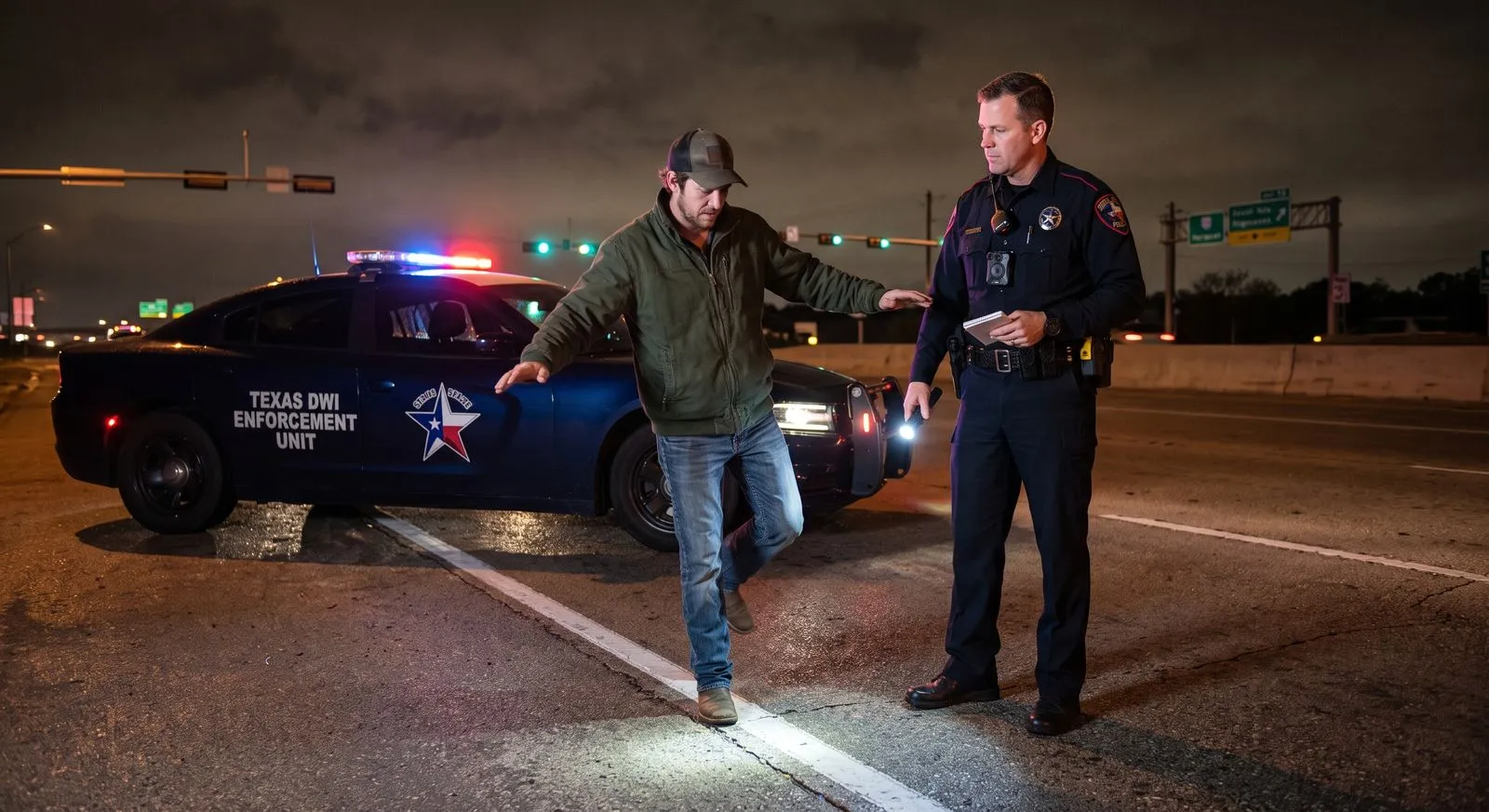
A traffic stop. A field sobriety test. A breath or blood sample. Before you know it, you are facing a DWI charge in Texas. What happens next depends on several factors: your blood alcohol concentration (BAC), whether you have prior convictions, and whether anyone was injured.
Texas takes DWI seriously. The penalties escalate quickly. A typical first offense is a misdemeanor. A third offense is a felony. And if your BAC is high enough, even a first offense can be elevated. Understanding the charge levels is the first step toward building a defense.
At Starr Law, P.C., we handle DWI cases in Collin County. We understand the law, the penalties, and the options that may be available in your case.
The Base Offense: DWI Under Texas Penal Code § 49.04
Under Texas Penal Code § 49.04, a person commits DWI if they operate a motor vehicle in a public place while intoxicated. Under § 49.01(2), “intoxicated” means:
- Having a BAC of 0.08% or higher, or
- Not having the normal use of mental or physical faculties by reason of the introduction of alcohol, a controlled substance, a drug, a dangerous drug, a combination of those substances, or any other substance into the body.
The base offense is a Class B misdemeanor. But that is just the starting point. The charge level changes based on two main factors: your BAC and your criminal history.

Charge Levels: Class B Misdemeanor to Third-Degree Felony
Class B Misdemeanor: First DWI, BAC Under 0.15
A first DWI with a BAC under 0.15 is generally a Class B misdemeanor.
Penalties:
- Confinement: 72 hours to 180 days in county jail (minimum 6 days if the driver had an open container of alcohol in their immediate possession)
- Fine: Up to $2,000
- License suspension after conviction: 90 days to 1 year
Class A Misdemeanor: First DWI with a Test Result of 0.15 or Higher
If a breath, blood, or urine test shows a BAC of 0.15 or higher, the charge is generally elevated to a Class A misdemeanor, even for a first offense. This is known as a “high-BAC DWI.”
Penalties:
- Confinement: Up to 1 year in county jail
- Fine: Up to $4,000
- License suspension after conviction: 90 days to 1 year
- Ignition interlock may be required
In my experience, prosecutors often treat high-BAC cases more aggressively, with less flexibility in plea negotiations and more resistance to dismissals. But a high BAC does not mean there is no defense. Breath and blood tests can be challenged, and the circumstances of the stop and testing procedures matter greatly.
Class A Misdemeanor: Second DWI
A second DWI is a Class A misdemeanor regardless of BAC.
Penalties:
- Confinement: 30 days to 1 year in county jail
- Fine: Up to $4,000
- License suspension after conviction: 180 days to 2 years
- Ignition interlock device: required as a condition of community supervision, and after a conviction if the new offense came within five years of the last one
Under Texas Penal Code § 49.09(a), a DWI becomes a Class A misdemeanor with a minimum term of confinement of 30 days if the person has one prior conviction for an intoxication-related offense.
Third-Degree Felony: Third or More DWI
A third DWI is a third-degree felony. Under § 49.09(b), a DWI is a felony of the third degree if the person has previously been convicted two times of a qualifying intoxicated-operation offense, such as DWI or boating while intoxicated. One prior conviction for intoxication manslaughter is also enough.
Penalties:
- Confinement: 2 to 10 years in the Texas Department of Criminal Justice
- Fine: Up to $10,000
- License suspension after conviction: 180 days to 2 years
- Substance abuse evaluation: required as a condition of any community supervision, with treatment if the evaluation calls for it
A third-degree felony puts state prison on the table. This is not a county jail case. Even when a judge grants community supervision instead, Texas law requires at least 10 days in county jail as a condition. For more on when a DWI crosses into felony territory, see Is a DWI a Felony in Texas?
Beyond the fines above: a final DWI conviction also carries a separate state traffic fine under Transportation Code § 709.001: $3,000 for a first conviction within 36 months, $4,500 for a second or later conviction within 36 months, or $6,000 if a test showed a BAC of 0.15 or more. The court must waive it if it finds the person indigent.
Other DWI-Related Offenses and Enhancements
DWI with a Child Passenger
Under Texas Penal Code § 49.045, a DWI with a passenger younger than 15 years old is a state jail felony. This applies even for a first offense.
DWI in a School Crossing Zone
Since September 1, 2025, a DWI committed while driving in a school crossing zone during the hours its reduced speed limit applies is a state jail felony under Texas Penal Code § 49.04(e). This also applies even for a first offense. The 2026 DWI law changes post covers the newer rules in more detail.
Intoxication Assault (§ 49.07)
If, because of the driver’s intoxication, a crash causes serious bodily injury to another person, the charge is intoxication assault, generally a third-degree felony. If the injured person is an on-duty firefighter or EMS personnel, it is a second-degree felony. If the injured person is an on-duty peace officer or judge, it is a first-degree felony.
Intoxication Manslaughter (§ 49.08)
If, because of the driver’s intoxication, a crash causes another person’s death, the charge is intoxication manslaughter, generally a second-degree felony. If the deceased is an on-duty firefighter, EMS personnel, peace officer, or judge, it is a first-degree felony. Since September 1, 2025, it can also be a first-degree felony in certain other cases, such as when more than one person is killed.
Reducing Your DWI Charge: Deferred Adjudication and Record Sealing
One of the most valuable outcomes in a first-offense DWI case is a Class B misdemeanor with deferred adjudication.
Since 2019, a judge may grant deferred adjudication for a first Class B DWI under 0.15 with no prior DWI convictions. This is a form of community supervision where the judge withholds a finding of guilt instead of convicting you. If you complete all terms, the case is dismissed. Deferred adjudication for a DWI generally comes with an ignition interlock requirement, unless the judge waives it after an evaluation.
The payoff: After completing deferred adjudication, you may be able to petition for an order of nondisclosure, which seals the DWI from public view. Nondisclosure is not an expunction. It bars criminal justice agencies from releasing the record to the public, so many private background checks will not show it, but law enforcement, licensing agencies, and other entities listed in the statute, such as school districts, can still see it.
Important limits:
- An alcohol concentration of 0.15 or higher at the time of the offense rules out deferred adjudication.
- A prior conviction or deferred adjudication for DWI or another qualifying intoxicated-operation offense that can enhance the new charge under § 49.09 rules out deferred adjudication.
- Holding a commercial driver’s license or commercial learner’s permit at the time of the offense rules out deferred adjudication. The CDL post explains what a DWI means for commercial drivers.
- To seal the record, you must have no other conviction or deferred adjudication for any offense except a fine-only traffic ticket, and the DWI cannot have involved a crash with another person, including a passenger in your vehicle.
- Sealing requires a waiting period: you can petition two years after you complete deferred adjudication and the case is dismissed.
- Even after sealing, the deferred DWI still counts as a prior if you are ever arrested again. A second DWI would be charged as a second offense, not a first.
Deferred adjudication is often the goal in a first-offense case that qualifies. It allows you to complete supervision, meet specific conditions, and then ask the court to seal the charge from public view. It is not automatic. It depends on the facts, the evidence, and negotiation with the prosecutor.
Defenses Against DWI Charges in Texas
Not every DWI arrest leads to a conviction. Potential defenses include:
- Improper traffic stop: The officer lacked reasonable suspicion to pull you over.
- Field sobriety test issues: The tests were improperly administered or the officer’s observations were inaccurate.
- Breathalyzer or blood test issues: The equipment was miscalibrated, the sample was mishandled, or the chain of custody was broken.
- Rising BAC defense: Your BAC was below 0.08 while you were driving and rose afterward, before the test was taken. The State can still try to prove intoxication through loss of normal faculties.
- Medical conditions: A medical condition or medication affected the test result or the officer’s observations. Being legally entitled to take a medication is not, by itself, a defense.
DWI Defense in McKinney and Collin County
I’m Kent Starr. I have practiced criminal defense in Collin County since 1997, and at Starr Law, P.C. I handle DWI cases from my office in McKinney.
In an eligible case, deferred adjudication may be an option, and a later order of nondisclosure may be possible if the separate requirements for sealing are met.
If you are facing a DWI charge, do not wait. After an arrest, you generally have only 15 days from the date you receive notice of a license suspension to request a hearing to contest it, and that deadline runs separately from your criminal case. Do not speak to investigators without an attorney. The first call you make should be to a defense lawyer who has experience with these cases.
Contact Starr Law, P.C. today for a free and confidential consultation. I handle every consultation myself. Call (214) 982-1408. You can also read more about DWI defense in Collin County.
This article is general legal information about Texas law and is not legal advice. Reading it does not create an attorney-client relationship. For advice about a specific situation, consult a licensed attorney.
References
- Texas Penal Code, Section 49.01 (Definitions)
- Texas Penal Code, Section 49.04 (Driving While Intoxicated)
- Texas Penal Code, Section 49.045 (Driving While Intoxicated with Child Passenger)
- Texas Penal Code, Section 49.07 (Intoxication Assault)
- Texas Penal Code, Section 49.08 (Intoxication Manslaughter)
- Texas Penal Code, Section 49.09 (Enhanced Offenses and Penalties)
- Texas Penal Code, Section 49.10 (No Defense)
- Texas Code of Criminal Procedure, Article 42A.102 (Eligibility for Deferred Adjudication Community Supervision)
- Texas Code of Criminal Procedure, Articles 42A.401, 42A.402, and 42A.408 (Conditions of Community Supervision for Intoxication Offenses)
- Texas Government Code, Section 411.0726 (Nondisclosure After Deferred Adjudication for Certain DWI Misdemeanors)
- Texas Government Code, Sections 411.0731 and 411.0736 (Nondisclosure After Certain First DWI Convictions)
- Texas Government Code, Section 411.0765 (Disclosure of Nondisclosed Records)
- Texas Transportation Code, Section 521.344 (Suspension for Offenses Involving Intoxication)
- Texas Transportation Code, Section 524.031 (Administrative License Suspension Hearing Request)
- Texas Transportation Code, Section 709.001 (Traffic Fine for Certain Intoxicated Driver Offenses)
Frequently asked questions
- What is the penalty for a first DWI in Texas?
- A first DWI with a BAC under 0.15 is usually a Class B misdemeanor, punishable by 72 hours to 180 days in county jail and a fine up to $2,000. If a breath, blood, or urine test shows a BAC of 0.15 or higher, it is generally a Class A misdemeanor, punishable by up to 1 year in jail and a fine up to $4,000. A final conviction also carries a separate state traffic fine of $3,000, or $6,000 if a test showed 0.15 or more, unless the court finds you indigent.
- When does a DWI become a felony in Texas?
- A DWI becomes a third-degree felony on the third or subsequent offense, or after a single prior conviction for intoxication manslaughter. It can also become a felony if it involves a child passenger, serious bodily injury (intoxication assault), or death (intoxication manslaughter). Since September 1, 2025, a DWI in a school crossing zone while the reduced speed limit applies is also a state jail felony.
- Can I get deferred adjudication for a DWI in Texas?
- Possibly. Since 2019, a judge may grant deferred adjudication for a first-offense Class B DWI with a BAC under 0.15, unless you held a commercial driver's license or commercial learner's permit at the time of the offense or have a prior conviction or deferred adjudication that can enhance the new charge. It generally requires an ignition interlock unless the judge waives it after an evaluation. Completion can lead to record sealing through an order of nondisclosure if you meet the other requirements.
- Does a DWI ever come off your record in Texas?
- A DWI conviction generally cannot be expunged. However, a first DWI with a BAC under 0.15 may be eligible for an order of nondisclosure (sealing) after a waiting period, whether it ended in deferred adjudication, probation, or a completed sentence, if you have no other criminal record apart from fine-only traffic offenses and the offense did not involve a crash with another person. Nondisclosure is not an expunction: law enforcement and certain agencies can still see the record.
- What is a "high-BAC" DWI?
- A high-BAC DWI is a first-offense DWI where a breath, blood, or urine test shows a BAC of 0.15 or higher. It is generally charged as a Class A misdemeanor instead of a Class B misdemeanor.